Title 24 Energy Compliance in Sacramento, CA
Title 24 energy compliance for an ADU in Sacramento means your project’s plans, insulation, windows, HVAC, lighting, and water heating systems are documented to meet California’s mandatory energy efficiency standards before the city issues your building permit. Most Sacramento homeowners encounter Title 24 twice: once during plan check when a certified consultant or HERS rater prepares the compliance documentation, and again at final inspection when field verifications confirm what was built matches what was filed. Benson ADU Sacramento includes Title 24 documentation as part of our ADU Design & Permitting service, so you don’t have to hunt down a third-party consultant on your own.
As a builder who’s put projects through Sacramento’s plan check process, Troy and the team handle the compliance paperwork, coordinate the required inspections, and catch energy details in design before they become change orders in the field. If you’re planning an ADU, a JADU, or a home addition and want to know what Title 24 will actually cost and require, call (279) 254-1808.
Key Takeaways
- Title 24 compliance is mandatory for any new ADU, JADU, or conditioned home addition in Sacramento; plan check will not move forward without it.
- Compliance documentation for a typical ADU runs roughly $600 to $1,400, depending on your HVAC choice, window package, and whether field verification (HERS testing) is needed.
- Your biggest cost drivers are the mechanical system you choose (mini-split vs. central heat pump), lighting selection, and water heating method.
- Benson ADU Sacramento folds Title 24 into the design and permitting scope from day one, so the compliance path is priced and planned before you’re committed to a cabinet layout.
- Every Benson project carries a written price before work starts and a 365-Day Done Right Promise, including the energy compliance scope.
When You Need Title 24 Energy Compliance
If any of these scenarios sounds like your situation, Title 24 is on your to-do list, whether or not anyone has said so yet:
- You’re submitting an ADU or JADU for a building permit in the City of Sacramento or Sacramento County. The plan check intake will not accept your drawings without a Title 24 compliance report, either from a certified energy consultant or HERS rater. No report, no permit number.
- You’re converting a garage, shed, or unfinished bonus room into livable square footage. Converting unconditioned space into conditioned space triggers the full Title 24 treatment: insulation requirements, fenestration ratings, mechanical equipment minimums, and lighting efficacy standards.
- You’re adding a room addition that will be heated or cooled. Any space with heating or air conditioning equipment falls under the California Energy Code, not just ADUs. A common Sacramento surprise is that the new wall area in an addition must bring the existing house into some level of energy compliance, not just the new room.
- Your design uses a lot of glass, a skylight, or a vaulted ceiling. Window-to-wall-area ratios, skylight U-factors, and roof insulation values trigger compliance trade-offs that a consultant has to model. You can’t chip away at the schedule by guessing.
- You want a heat pump water heater, a tankless unit, or rooftop solar to count toward your compliance. Sacramento’s climate zone (Zone 12) has specific modeling inputs that can make or break a solar or heat pump upgrade payoff. The compliance report is where those credits are captured.
- Your lender, appraiser, or refinance team is asking for the ADU’s energy documentation. Post-construction documentation, including the HERS certificate when applicable, is part of your permanent home record and gets pulled during loans, appraisals, and resale.

Our Title 24 Energy Compliance Process
Here’s the sequence we follow, in plain English. The goal is no surprises, no missing report at permit intake, no failed field inspection.
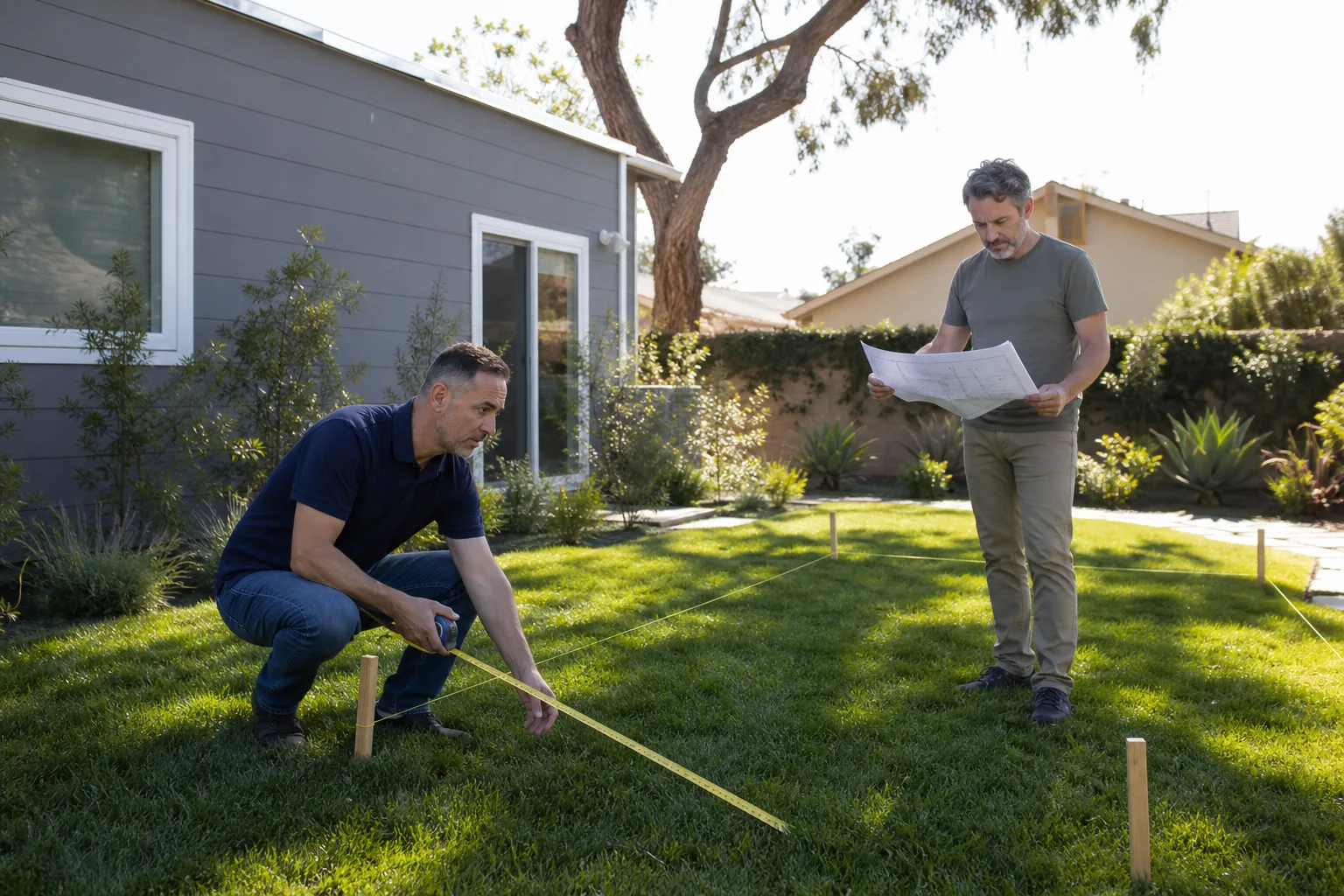
- Design review. Before floor plans are finalized, we review the ADU or addition layout for energy red flags: excessive west-facing glass, bloated window-to-wall ratios, undersized attic insulation, or a mechanical system that will trip a mandatory requirement. These decisions are much cheaper to make on paper than on the framing walkthrough.
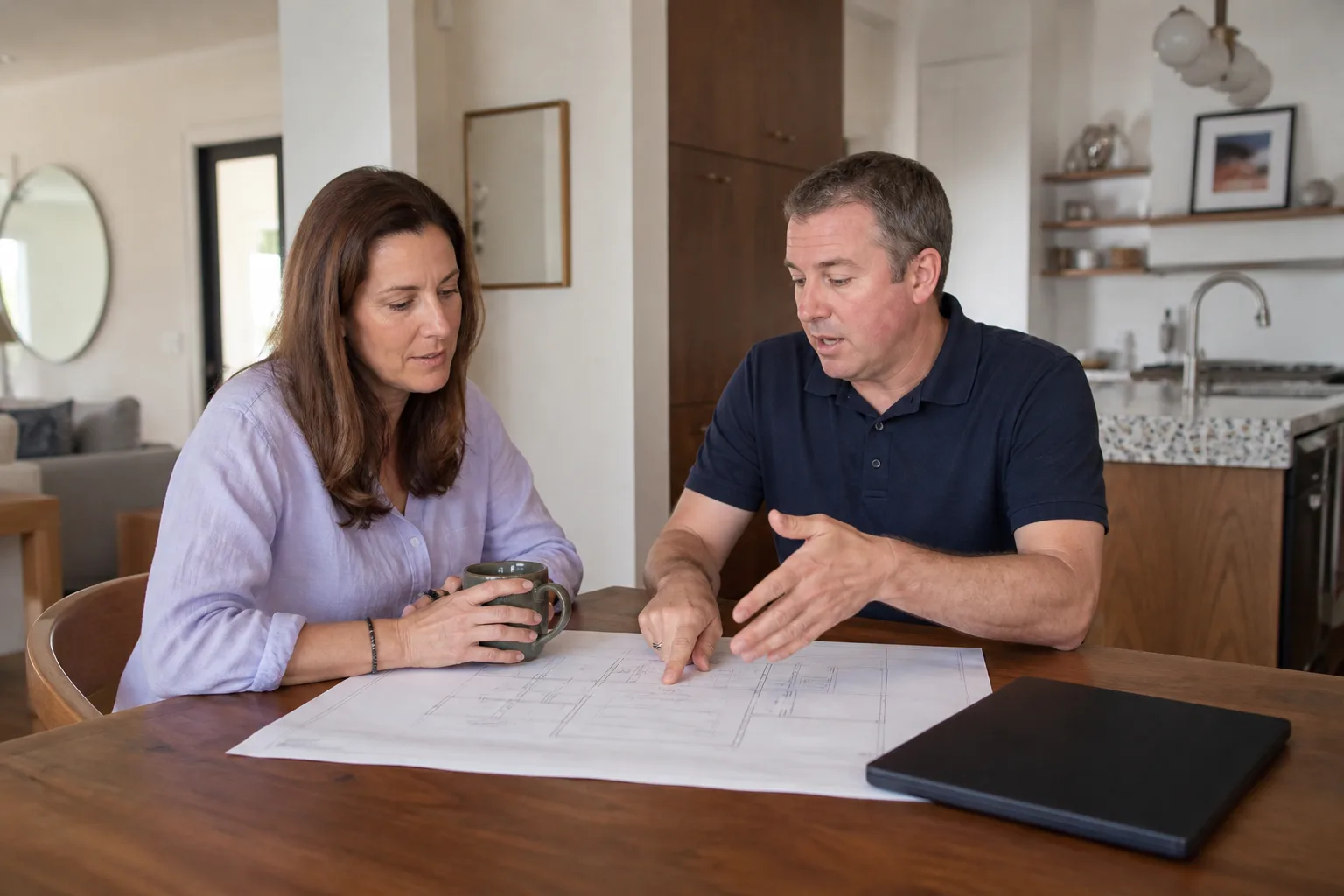
- Compliance modeling and documentation. We prepare your Title 24 compliance documents using an approved modeling program. That includes the CF-1R (the plan-side certificate) for your permit set. If your project includes a HERS measure, like duct testing or airflow verification, we schedule the rater and identify which specific fields need inspection.
- Permit set assembly. Your compliance forms, lighting schedule, mechanical plan, and window performance schedule get bundled with the architectural set. Sacramento plan check wants every energy sheet and certificate in the same file, and we assemble it so it’s not a boomerang for missing pages.
- Installation and verification. During construction, your project manager ensures the specified insulation, windows, HVAC equipment, and lighting actually land on the job as modeled. If a product gets substituted, we re-run the compliance calculation before it’s installed, not after the inspector arrives.
- Final documentation. We get the CF-2R and any final HERS documentation in hand and turned over to you. That’s what the city closes out and what you’ll want in your permanent records for any future sale, refinance, or rental registration.
Title 24 Energy Compliance Pricing in Sacramento
Title 24 compliance documentation for an ADU or home addition in Sacramento typically lands between $600 and $1,400 when the project is a straightforward residential build. If the project needs field verification, like HERS duct leakage testing or airflow testing, add roughly $300 to $600 on top of the documentation fee. For more complex additions that attach to the existing home and force modeling of the original structure, the total can reach $2,000 to $2,800. The work is not hourly billable fluff: it’s a fixed-scope deliverable.
What actually changes the number:
- Whether you’re adding a mini-split heat pump or tying into the main house HVAC. A mini-split with a high HSPF rating simplifies compliance modeling. Tying into the existing system often triggers duct testing on the existing home, which adds cost and coordination.
- Window-to-wall-area ratio. An ADU design with floor-to-ceiling glass on the front wall is achievable, but it means the model has to pull performance from somewhere else. That may mean upgraded wall insulation or higher-performing windows.
- Water heating choice. A heat pump water heater is the most common way to meet the water heating requirements in a Sacramento ADU. An electric resistance tank can work, but it usually forces other efficiency upgrades into the model.
- Whether the space was previously conditioned or not. If you’re starting with a raw garage, the entire envelope enters the calculation. If part of the project is already inside a conditioned dwelling, the math shifts.
- Lighting. California requires high-efficacy lighting in all permanently installed fixtures. The cost difference is usually modest, but a custom fixture package with non-compliant lamps has to be swapped or modeled around.
Benson ADU Sacramento estimates the Title 24 line item as part of the written project price, not as a “we’ll figure that out later” add-on. Every homeowner receives a written price before work begins, along with the 365-Day Done Right Promise. Call (279) 254-1808 for a free estimate that includes the compliance scope.
Common Title 24 Mistakes We See in Sacramento
After working through plan check with the city and county, these are the energy compliance issues we repeatedly correct on projects that started elsewhere:
- The compliance package was ordered too late. Waiting until the week before plan check means your consultant and your architect are making trade-offs under deadline, and those trade-offs are usually the expensive ones.
- Substituting windows or doors after permitting. A window package that looked equivalent on the showroom floor may have a completely different U-factor and SHGC in the model. If you swap, re-run the numbers before you cut the check.
- Underestimating the existing house trigger. Many additions in Sacramento neighborhoods like Land Park, East Sacramento, or Curtis Park have to bring portions of the original home into compliance. Homeowners are often surprised that the new square footage is not the only thing being modeled.
- Skipping the HERS rater until after drywall. Field verification like duct testing has to happen at specific construction stages. Once drywall is up, some tests become far more invasive, or impossible to complete as originally scoped.
- Choosing equipment based on brand loyalty instead of the model output. You may love a particular water heater or HVAC brand, but the Title 24 model does not share your loyalty. The certificate cares about performance specs and consistency with the filed documentation.
Title 24 and Prefab ADUs in Sacramento
If you’re considering a factory-built ADU, the Title 24 conversation is different. Brands like Abodu and Cover engineer their units to California’s energy code as part of their production process, which means the compliance documentation often already exists before you commit. What changes locally is certification that the delivered unit and your site-built foundation, electrical service, and utility connections still satisfy the Sacramento plan check requirements.
For site-built ADUs and additions, we specify products from James Hardie for cladding and work with Dvele where clients want a high-performance shell. Each choice affects the Title 24 model differently, but the approach is the same: put the compliance consequence in writing before the purchase order goes out.
Written by Troy Eastman, Owner at Benson ADU Sacramento, serving Sacramento.