Last updated October 15, 2026
The Complete Guide to ADU in Sacramento
Sacramento approved more than 1,800 ADU permits in 2023 alone, yet most homeowners who started the process never broke ground. They weren’t stopped by city rules or contractor availability. They hit a wall called sticker shock, the kind that could have been predicted in week one with the right numbers up front. This guide gives you those numbers, the Sacramento-specific ones most websites skip, so you can decide whether an ADU pencils out for your lot, your timeline, and the person who will eventually live in it.
Quick Answer
An ADU in Sacramento typically costs between $180,000 and $420,000 depending on type, size, and whether you go prefab or site-built, with detached units on the higher end and garage conversions on the lower. You’ll need roughly 12 to 18 months from first conversation to certificate of occupancy for a site-built unit, and closer to 6 to 10 months for a prefab. The single most important move you can make before anything else is getting a written price before work starts, not a verbal estimate that drifts once the foundation is poured.
Table of Contents
- The Four ADU Types in Sacramento: Which One Fits Your Lot
- Lot Size Mapping: ADU Options for 5,000 to 8,000 Square Foot Sacramento Lots
- What ADUs Actually Cost in Sacramento Right Now
- Sacramento ADU Rent Comps by ZIP Code: 95818, 95864, 95825
- Sacramento’s 2024 Owner-Occupancy Rules: Who Can Rent and Who Can’t
- Prefab vs. Stick-Built Timelines in Sacramento’s Permit Queue
- What a Written Price Before Work Starts Actually Protects You From
- Common Mistakes to Avoid
- When to Call a Professional
- Frequently Asked Questions
The Four ADU Types in Sacramento: Which One Fits Your Lot
Sacramento allows four main categories of accessory dwelling units, and each one behaves differently on a 5,000 to 8,000 square foot lot. Choosing wrong can cost you $80,000 or more in overruns, or months of redesign after the city flags your setbacks. Here’s what each type actually means, in plain English.
Detached ADU
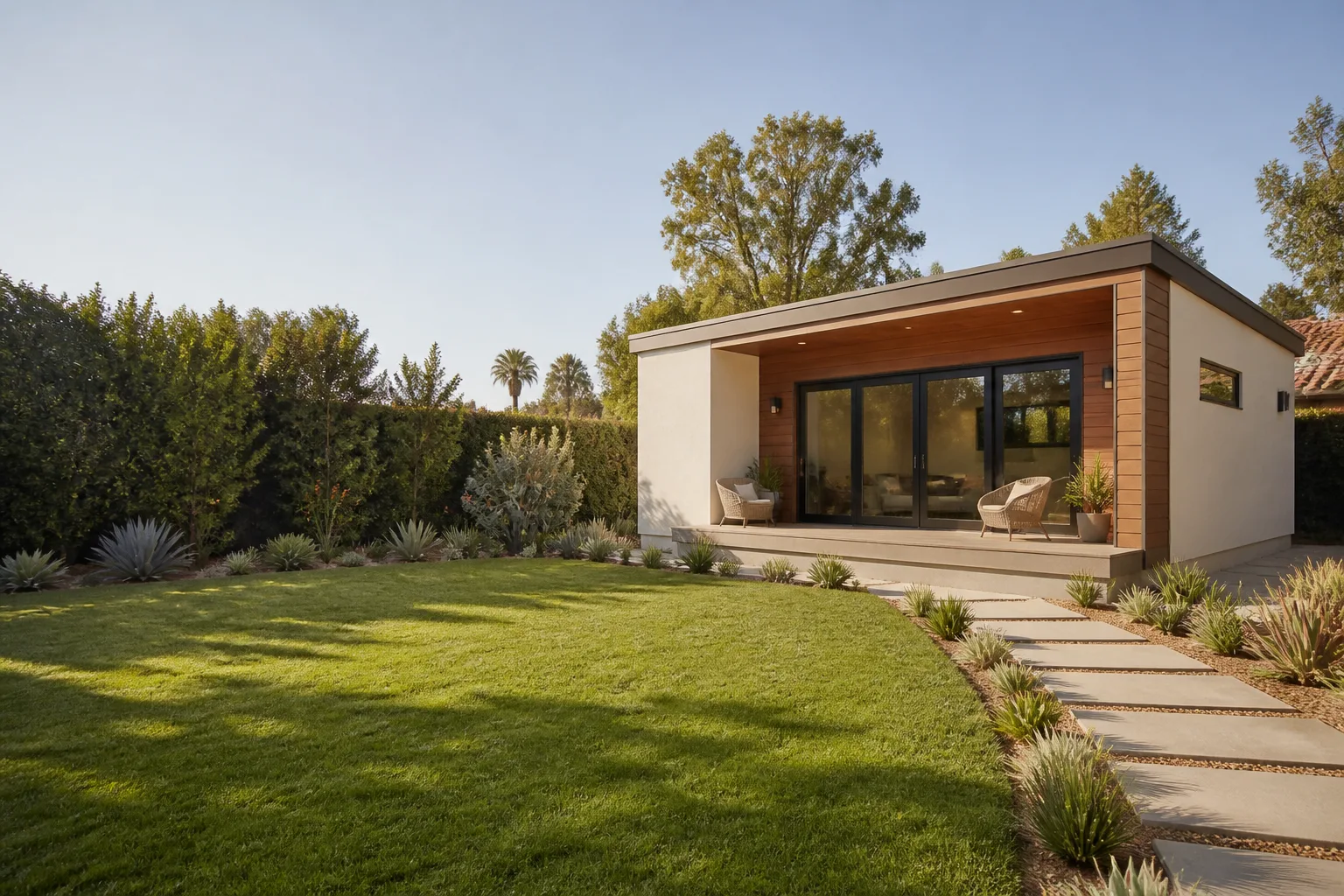
A detached ADU is a completely separate structure, usually 400 to 1,000 square feet, built in the backyard where the lawn used to be. This is the most flexible option for rental income because tenants get their own address, their own entrance, and no shared walls. It also costs the most per square foot. In Sacramento, a detached site-built ADU typically runs $250 to $450 per square foot before soft costs like permits and utility connections. On an 8,000 square foot lot, you have room for up to 1,000 square feet of detached floor area under current state allowances, but Sacramento’s setback rules (4 feet from rear and side property lines for units under 16 feet tall) will dictate exact placement.
Attached ADU
An attached ADU shares at least one wall with the primary home. It costs 10 to 20 percent less per square foot than a detached unit because you share foundation work, one less exterior wall to finish, and often the existing electrical panel. The tradeoff is tenant privacy. With an attached unit, renters hear your kitchen and you hear their TV. That doesn’t matter if the unit is for a parent or an adult child, but it does affect rental comps. We’ve built attached ADUs in Land Park and East Sacramento where the shared-wall configuration was never an issue because the owners wanted aging parents close, not paying tenants at arm’s length.
Garage Conversion ADU
A garage conversion is exactly what it sounds like: the existing garage becomes a studio or one-bedroom unit. This is the cheapest ADU path in Sacramento because the foundation, roof, and two to three walls already exist. Typical range runs $90,000 to $180,000 depending on whether the garage slab needs leveling, whether plumbing has to cross the entire lot, and whether you must rebuild the garage door wall from scratch to meet insulation codes. The catch: you lose covered parking, which matters in Sacramento’s summer heat, and some buyers care more than others when you eventually sell.
Prefab ADU
A prefab ADU arrives as panels or modules built in a factory, then assembled on your Sacramento lot in weeks rather than months. Brands like Abodu and Plant Prefab have building systems that arrive 80 to 90 percent complete and get craned over the existing house. We build with these systems because they remove weather delays, which in Sacramento’s rainy winter months can push a stick-built project back by 6 to 10 weeks. Prefab units typically land between $220,000 and $380,000 turnkey, and the finish quality from companies like Dvele and Mighty Buildings is industrial-grade, not trailer-grade.
Lot Size Mapping: ADU Options for 5,000 to 8,000 Square Foot Sacramento Lots
Sacramento’s older neighborhoods, think Curtis Park, Tahoe Park, North Oak Park, and much of East Sacramento, sit on lots between 5,000 and 7,500 square feet. Your lot size isn’t just a number on a parcel map. It decides which ADU types the city will approve without a discretionary review hearing, which can add months and thousands in fees.
5,000 to 5,500 Square Foot Lots
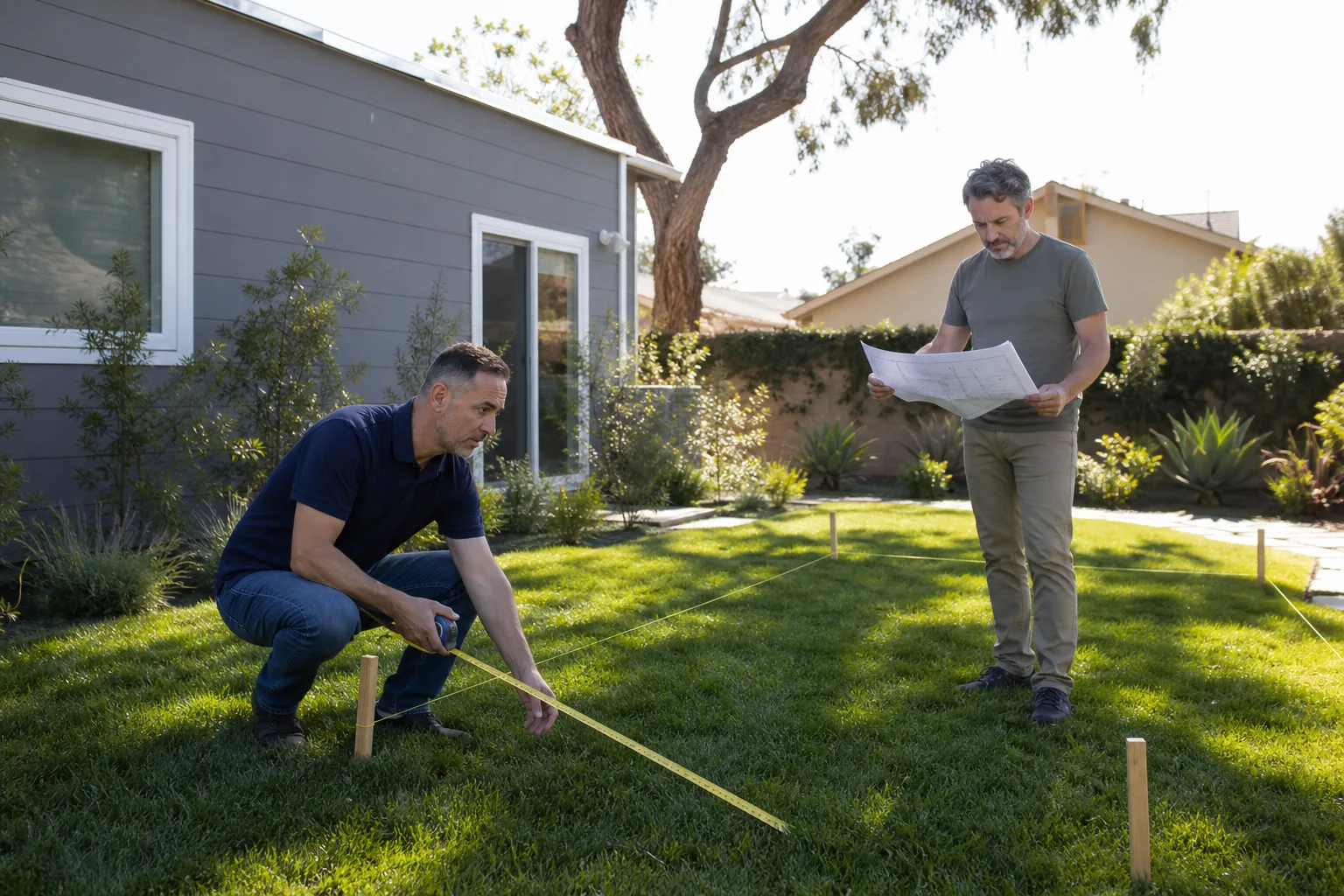
On a tight 5,000 square foot lot, a detached ADU becomes difficult because Sacramento requires 4-foot rear and side setbacks, and you cannot build within the front setback at all. A 500 square foot detached unit eats roughly 900 square feet of yard once you include side clearance. That may violate the city’s open space ratio, which requires a percentage of the lot to remain unpaved. On lots this size, a garage conversion or an attached ADU is almost always the smarter move. Both types reuse existing footprint and avoid triggering additional open space review.
5,500 to 6,500 Square Foot Lots
This is the sweet spot for a small detached ADU up to about 600 square feet. Lots in this range are common in Colonial Heights, Hollywood Park, and parts of South Land Park. You have enough rear yard for a one-bedroom unit while keeping a usable patio between the main house and the ADU. The Sacramento building department will still require a site plan showing setback compliance, and you’ll want to check your trees. Protected oaks and sycamores common in older Sacramento neighborhoods can force the unit to shift toward the house, which eats into the fire separation requirement between structures.
6,500 to 8,000 Square Foot Lots
Once you pass 6,500 square feet, a detached ADU up to 1,000 square feet fits without forcing you to pave over half the yard. East Sacramento, River Park, and Pocket neighborhoods have many lots in this range. A detached two-bedroom at 800 to 1,000 square feet rents for the highest premium in Sacramento, and you still keep a functional backyard. Prefab units from Tuff Shed and Plant Prefab work especially well on these larger lots because the crane needs a delivery window of roughly 30 by 60 feet of clear space, which simply doesn’t exist on a 5,000 square foot lot.
What ADUs Actually Cost in Sacramento Right Now
Sacramento ADU pricing has stabilized since the 2022 run-up, but it never went back to pre-pandemic levels. These are the real numbers we see on quotes in the Sacramento market as of 2025. Every figure below reflects turnkey pricing: design, permits, construction, finishes, and utility connections. Soft costs like financing fees, an ADU tax consultant, or landscaping restoration are separate.
| ADU Type | Typical Size | Sacramento Cost Range | Cost Per Sq Ft |
|---|---|---|---|
| Garage Conversion | 350 – 600 sq ft | $90,000 – $180,000 | $180 – $300 |
| Attached ADU (site-built) | 400 – 700 sq ft | $150,000 – $280,000 | $300 – $400 |
| Detached ADU (site-built) | 500 – 1,000 sq ft | $220,000 – $450,000 | $350 – $450 |
| Prefab ADU (Abodu, Plant Prefab, etc.) | 400 – 1,000 sq ft | $220,000 – $380,000 | $350 – $500 |
What drives the range? Site conditions. A perfectly flat South Land Park lot with easy utility access lands on the low end. A Pocket-area lot with 30 feet of trenching through clay soil and an undersized electrical panel to upgrade will push toward the top. Sacramento’s soil, heavy clay over hardpan in many older neighborhoods, adds to foundation costs compared to sandier soil in parts of Elk Grove or Roseville.
You should also budget for permits and fees. Sacramento’s ADU permit fees run roughly $8,000 to $15,000 depending on unit size and school district impact fees, which the city reduced for ADUs under 750 square feet. Don’t let a contractor quote construction costs and leave you guessing on permits. A written price from ADU Builders in Sacramento includes everything line by line before work starts.
Sacramento ADU Rent Comps by ZIP Code: 95818, 95864, 95825
Most Sacramento homeowners build an ADU for one of three reasons: housing a family member, creating a workspace, or generating rental income. If rent is part of your math, run these ZIP code comps before you spend $15,000 on plans. Realistic monthly rent, not aspirational Zillow numbers, changes your ROI timeline by years.
95818: Curtis Park, Land Park
Studio and one-bedroom ADUs in 95818 rent for $1,400 to $1,900 per month. These older, tree-lined neighborhoods command premium rents because tenants get walkable streets, Land Park access, and quick downtown commutes. A $1,700 monthly rent against a $280,000 attached ADU gives you a gross annual yield of about 7.3%. That’s above Sacramento’s average rental yield for single-family homes.
95864: Sierra Oaks, Arden Park, Sierra Oaks Vista
In 95864, one-bedroom ADUs rent for $1,500 to $2,100 per month. This ZIP pulls tenants who work in the Arden business corridor or remotely from home and want quiet, leafy streets with larger lots. Two-bedroom detached units can push $2,300. A $320,000 detached ADU renting at $2,000 monthly yields about 7.5% gross, plus the long-term value of adding square footage to a home in one of Sacramento’s most stable school districts.
95825: Arden-Arcade, Campus Commons
In 95825, rents are slightly softer: $1,250 to $1,700 for one-bedroom units. The ZIP has more apartment competition, which caps what tenants will pay for a backyard ADU. But the tradeoff is lower build costs on the many flat, larger lots in the area. A $200,000 garage conversion renting at $1,400 monthly gives a gross yield of 8.4%, among the best ROI paths in Sacramento because the entry cost stays low.
These are gross yields before property taxes, insurance, maintenance, and vacancy. Run your own math with a conservative 5 percent vacancy and a 15 percent maintenance reserve to see whether the unit cash-flows on a 30-year loan. Most Sacramento ADUs break even on rent by month two only if the unit was designed for tenants from the start: separate meter or submetered utilities, sound-rated walls, and a private entrance.
Sacramento’s 2024 Owner-Occupancy Rules: Who Can Rent and Who Can’t
For years, Sacramento homeowners could build an ADU and rent it out whether or not they lived in the main house. That changed with the city’s 2024 code alignment, which reinstated an owner-occupancy requirement for certain ADU configurations.
Here’s the current lay of the land in plain terms:
- Detached ADU on a single-family lot: Sacramento now requires the property owner to live in either the main house or the ADU as their primary residence. You cannot rent both units to unrelated tenants.
- Attached ADU: The owner-occupancy requirement applies unless the ADU is deed-restricted as affordable housing or was built before the 2024 rule took effect.
- Garage conversion ADU: Same owner-occupancy trigger as an attached unit.
- JADU (junior ADU, under 500 sq ft, inside the existing home): Owner-occupancy is required, full stop. You cannot rent a JADU separately unless the owner lives on site.
If you’re planning to move out of Sacramento within a few years and intended to rent both the house and the ADU, this rule changes your calculus. The ADU still adds resale value and works for family housing. But if rental income from both units was the reason to build, you need to know this before signing a contract. A Home Addition Contractor in Sacramento can walk you through the current rule as it applies to your specific parcel, because exemptions and deed-restriction paths do exist.
Prefab vs. Stick-Built Timelines in Sacramento’s Permit Queue
Sacramento’s building department has gotten faster since the 2023 backlog cleared, but “faster” is a relative term. A site-built ADU still moves through the Sacramento permit queue at a pace that surprises most homeowners.
Here are the current timelines for each path:
- Site-built detached or attached ADU: 4 to 6 months for design and permit approval, then 6 to 10 months of construction. Total: 10 to 16 months from first conversation to move-in.
- Garage conversion: 3 to 5 months for design and permits, then 3 to 5 months of construction. Total: 6 to 10 months.
- Prefab ADU (Abodu, Plant Prefab, Dvele): 2 to 4 months for design, prefab factory lead time, and permit submission, then 2 to 4 months of site work and assembly after the panels arrive. Total: 6 to 10 months.
The prefab advantage isn’t a shorter total timeline in every case. It’s predictability. Factory-built panels from companies like Abodu and Plant Prefab aren’t delayed by Sacramento winter rain, trade crew scheduling gaps, or lumber price swings. The site work runs on a fixed schedule because the building itself arrives on a truck, crane-lifted into place, and sealed within two weeks. We build with these systems for exactly that reason: the homeowner knows the move-in date before the crane shows up.
Stick-built is not obsolete. It still gives you the most design flexibility for oddly shaped Sacramento lots or historic district requirements. But it comes with schedule risk that no contractor can honestly eliminate. The finish materials matter too. James Hardie cladding holds up better than vinyl against Sacramento’s 100-degree summers and UV exposure, which is why we specify it on our stick-built exteriors and offer it as an upgrade on prefab units that arrive with standard siding. For ongoing upkeep tips, see our Seasonal ADU Care for Sacramento: Year-Round Homeowner’s Guide.
What a Written Price Before Work Starts Actually Protects You From
Sacramento’s contractor chain is deep. A general contractor hires a framer, an electrician, a plumber, a drywall crew, and a roofer. Each one quotes the GC a price. The GC quotes you a price with a markup. If any subcontractor comes in over budget halfway through the job, the GC has two choices: eat the difference or send you a change order.
A verbal estimate protects exactly none of that. A written price before work starts means the GC has done the sub-bid work up front, locked those numbers, and signed a document saying the price won’t drift unless you change the scope. That’s the norm in commercial construction. Sacramento residential is catching up, but plenty of contractors still hand out ballpark figures and hope you won’t notice when the final bill tops the quote by 20 percent.
Here’s what a real written price includes:
- Line-item breakdown: site prep, foundation, framing, electrical, plumbing, HVAC, drywall, paint, flooring, fixtures, and finish trim, each with a dollar figure.
- Permit and fee schedule: Sacramento building department costs, school district impact fees, and any sewer or water connection charges listed separately.
- Allowance items: lighting fixtures, cabinet hardware, and appliances named with a dollar allowance, not left open-ended.
- Change order protocol: how changes during construction are priced and approved in writing, before work continues.
- Warranty terms: what’s covered, for how long, and who to call when something fails.
We put every Benson ADU Sacramento project under a 365-Day Done Right Promise. If something covered isn’t right within a full year, we fix it at no charge. That promise is stamped on the written price, not buried in fine print. If a contractor won’t give you a written price before work starts, that’s your signal to keep looking.
Common Mistakes to Avoid
- Designing before checking the Sacramento zoning overlay. Historic districts like Boulevard Park and parts of Land Park have design review requirements that can reject a perfectly good ADU plan. Check your overlay before spending money on drawings.
- Ignoring the electrical panel question. Many Sacramento homes built before 1980 have 100-amp panels. A 1,000 square foot ADU typically needs a 200-amp upgrade, which adds $3,500 to $6,000. Get this priced in week one, not discovered at rough-in.
- Chasing the lowest per-square-foot quote. A Sacramento contractor quoting $200 per square foot on a detached ADU is either omitting permits, using unlicensed subs, or planning to make it up on change orders. The number that matters is the written total, not the rate.
- Skipping the utility submeter question. If the ADU shares the main house meter, you can’t legally charge a tenant for their actual utility use in most cases. A submeter or separate service costs $2,000 to $5,000 up front and pays for itself.
- Building a two-bedroom ADU on a lot where a one-bedroom fits better. More square footage means more rent only if the unit stays rented. A 400 square foot studio in Curtis Park rents in days. A 900 square foot two-bedroom with awkward layout sits empty longer in a soft month.
- Not interviewing the actual project manager. The person who sells you the ADU is rarely the person running the job. Ask who your daily point of contact is, and whether you’ll have their direct number.
- Ignoring the rear yard access question. If the ADU blocks the only path from the front yard to the back, you’ve created a maintenance problem for gutters, fences, and landscaping. Plan a 3-foot side yard for access even when the city doesn’t require it.
When to Call a Professional
You should bring in an ADU contractor before you’ve decided anything, not after you’ve fallen in love with a floor plan. The cheapest and most useful conversation happens at the start, when a professional can look at your Sacramento lot, your existing structures, and your utility lines and tell you which ADU types are actually viable. That conversation costs nothing if the contractor offers free estimates.
Definitely call a professional when your lot is under 5,500 square feet, when your home is in a Sacramento historic district, when your electrical panel is 100 amps or less, when you have protected trees, or when the ADU will be rented to a tenant rather than housing family. Each of those conditions triggers design constraints that are expensive to unwind later. Benson ADU Sacramento home offers free estimates in Sacramento, call (279) 254-1808 to schedule one.
Frequently Asked Questions
An ADU in Sacramento costs between $90,000 for a basic garage conversion and $450,000 for a high-end 1,000 square foot detached unit, with most homeowners spending $200,000 to $350,000 turnkey. The three biggest cost drivers are unit type, site conditions on your specific lot, and whether you choose prefab or site-built construction. Call (279) 254-1808 for an exact quote on your property, estimates are free.
You can rent your ADU in Sacramento if you live in either the main house or the ADU as your primary residence, per the 2024 owner-occupancy rule. Renting both units to unrelated tenants is no longer allowed for most configurations. Family housing and long-term owner occupancy keep you in compliance.
A Sacramento ADU takes between 6 and 16 months from first design conversation to move-in, depending on whether you choose a garage conversion, a prefab unit, or a site-built detached ADU. Prefab systems from companies like Abodu and Plant Prefab shorten the construction phase significantly once permits are approved.
Yes, every ADU in Sacramento requires a building permit, and most require a separate electrical, plumbing, and mechanical permit as well. Sacramento’s building department reviews ADU plans for setback compliance, fire safety, and structural standards. Working without a permit risks fines and creates problems when you eventually sell the home.
A prefab ADU is built in a factory and assembled on your Sacramento lot in a matter of weeks, using systems from brands like Abodu, Plant Prefab, and Dvele. A site-built ADU is constructed stick by stick on your property over several months. Prefab trades some design flexibility for schedule predictability and factory-controlled quality; site-built gives you unlimited customization at the cost of weather and labor scheduling risk.
The price will not change if you have a written price before work starts and you don’t alter the scope of the project. Change orders happen only when the homeowner requests a change, and a quality contractor puts every change in writing with a dollar amount before doing the work. Verbal estimates are where Sacramento homeowners get burned by 20 to 30 percent cost overruns.
The Bottom Line
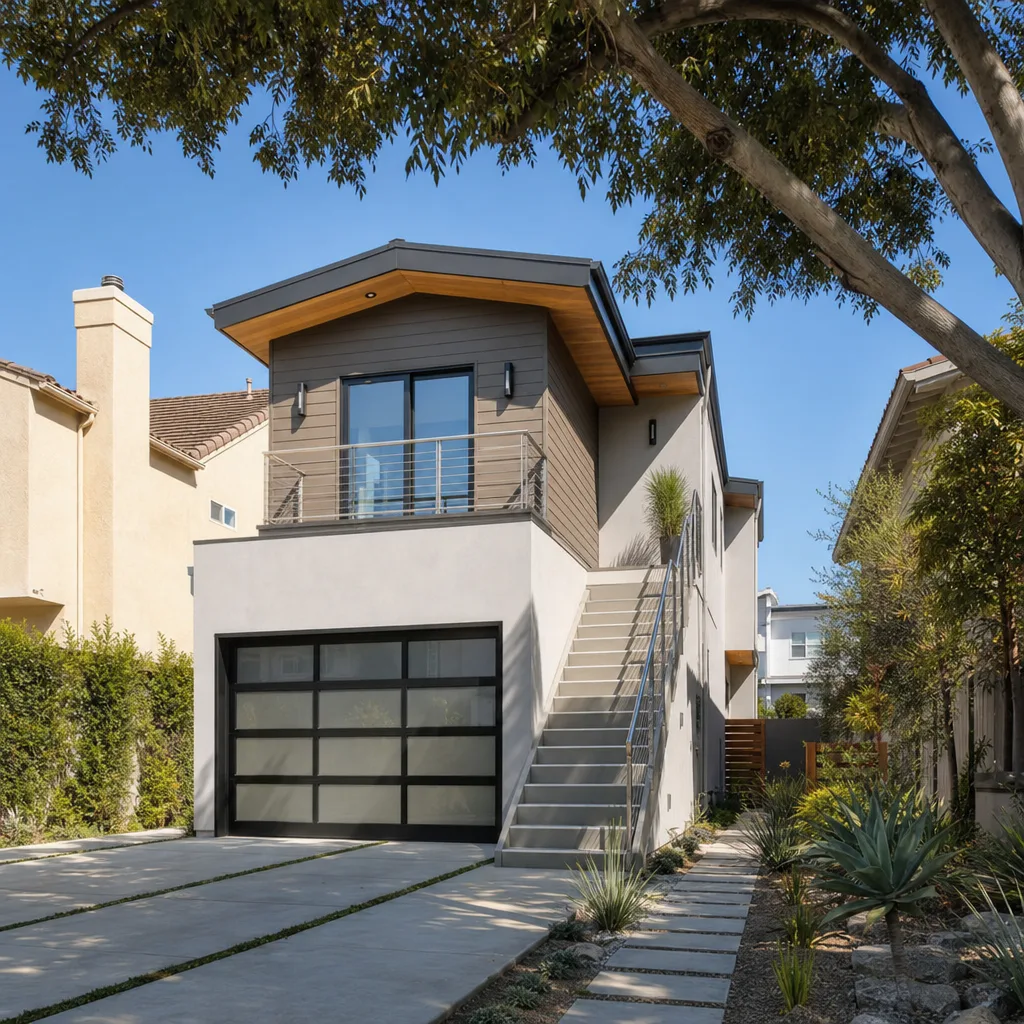
Sacramento has matured from ADU curiosity to ADU market, and the questions worth asking aren’t about permission anymore. For more guides & resources on planning, pricing, and building your ADU, explore our blog. They’re about numbers: what your lot size allows, what your ZIP code rents for, whether owner-occupancy rules affect your plan, and which construction path gets you a finished unit without blowing your timeline or your budget. The homeowners who succeed are the ones who get a written price on day one, not a verbal range. Sacramento’s best ADU builders put the plan, the price, and the warranty in writing before a single shovel turns.
Room Addition Contractor in Sacramento
Written by Troy Eastman, Owner at Benson ADU Sacramento, serving Sacramento since 2006.